 By Nibav on June 16, 2025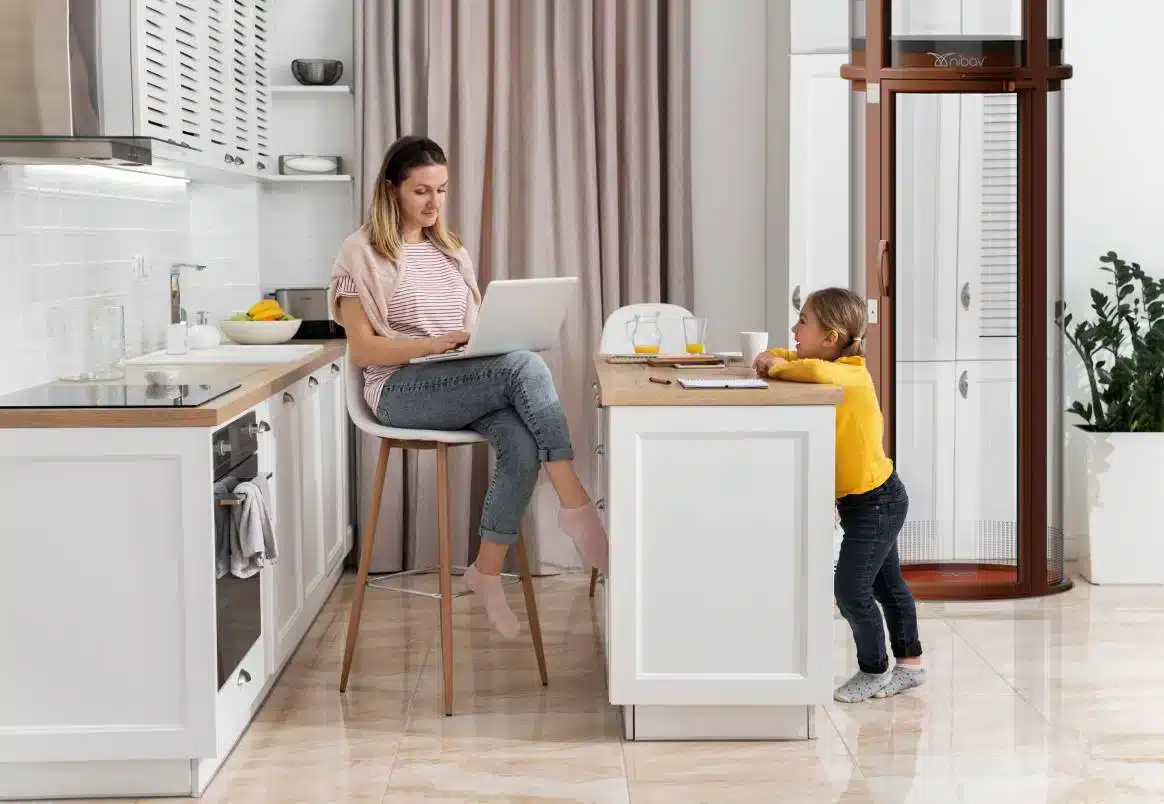
Imagine you could make your home more accessible, but you think to yourself, ”Where am I going to fit an elevator”? Most people think lifts take up a lot of space, visualize noisy construction, losing rooms, and going through a ton of renovations.
What if you could get a home elevator installed with just 1 square meter of floor space, all while maintaining your home and lifestyle intact?
At Nibav Thailand, that’s not just possible—it’s already happening in homes around Bangkok, Phuket, and beyond! Whether you are preparing for retirement, assisting a loved one with mobility issues, or just love the idea of having a smarter home, a compact elevator could be an option for your home.
So, let’s walk you through this space-saving elevator solution and what you need to consider to incorporate a compact elevator into your home.
Why the 1m x 1m Elevator is a Game-Changer?
We’ve come a long way from old-school lifts that needed pits, shafts, and machine rooms. Thanks to new technology, compact elevators now take up less space than a small wardrobe. That’s right—your new lift could fit in an area smaller than the space under your stairs.
To give you a clearer picture:
- A standard wardrobe takes up more than 1.2m x 0.6m
- Nibav’s home elevator? Just 1m x 1m of space
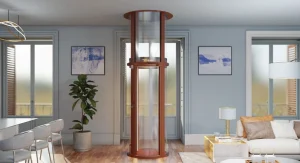
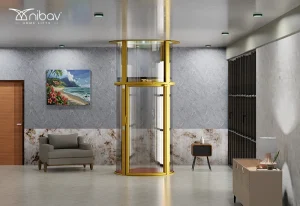
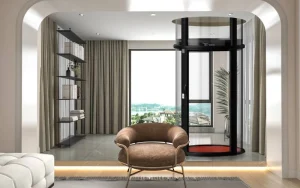
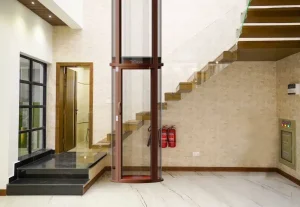
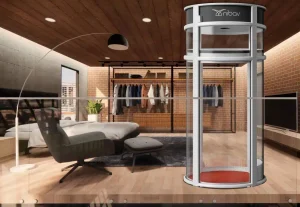
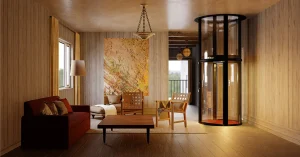
You don’t have to sacrifice rooms, redesign your home, or take on a major renovation. This lift can be installed alongside your staircase, beside a hallway, or even in a corner of your living room.
And because you’re working with such a small footprint, your overall cost, especially for installation, drops significantly. It’s quicker to set up, involves less labor, and doesn’t need major structural changes. That’s a win for both your home and your wallet.
Machine Room-Less Elevators: Built for Modern Thai Homes
You might be wondering, “How does it work without a machine room?” Great question.
Nibav home elevators are powered by air pressure and designed with machine room-less technology. That means everything the lift needs to run—motors, controls, and the drive system—is built right into the unit itself. No separate space required.
Here’s what you get:
- No pit needed
- No overhead shaft required
- No oil or lubrication mess
- No external motor box taking up space
Instead of relying on cables or hydraulics, these lifts use air pressure to move smoothly between floors. You plug it into a regular 220V socket—like the ones already in your home—and you’re good to go.
What makes this system perfect for Thailand Homes? For one, it handles humidity and coastal conditions well, ideal for homes near the sea. It’s also super quiet. You could install this lift next to a bedroom and still sleep peacefully.
The compact design also means 40–50% less space consumption compared to traditional models. It’s a smart, stylish solution that won’t disrupt your daily life.
Table of Contents
- Why the 1m x 1m Elevator is a Game-Changer?
- Machine Room-Less Elevators: Built for Modern Thai Homes
- What Structural Work Is Needed? Not Much
- Your Installation Timeline, Explained
- Common Questions from Homeowners in Thailand
- Will this elevator fit in my home?
- Is it noisy?
- What happens during a power cut?
- How often does it need servicing?
- How much weight can it carry?
- Cost vs. Value: Why It’s a Smart Investment
- Let’s Bring It Home—In Just 1m x 1m
What Structural Work Is Needed? Not Much
Worried about structural changes? Don’t be. Installing this type of residential elevator is surprisingly simple.
Here’s what it typically needs:
Foundation
- A flat, concrete pad is enough
- No pits or shaft digging
- Basic floor reinforcement if your home is older
Support & Height
- Standard ceiling height (around 2.4m per level) works
- Can be installed freestanding or with light wall support
- Door clearance of about 80cm–90cm (like a regular door)
Electrical Setup
- Just a single-phase 220V outlet
- Emergency backup battery included
- Built-in intercom, alarm, and locking features
All lifts are designed to meet international safety standards, and Nibav Thailand ensures that every system is compliant with local building codes. Our team handles inspections, permits (if needed), and testing, so you don’t have to stress over paperwork.
So, whether you’re living in a multi-storey townhouse in Bangkok or a beachside villa in Hua Hin, this space-saving elevator works for you.
Your Installation Timeline, Explained
Here’s the best part—it doesn’t take months to install. From first visit to final handover, the entire process usually takes 4–5 days.
Week 1: Planning and Prep
- Our team visits your home to inspect the site
- We check your layout, measure dimensions, and confirm structural conditions
- You pick the design, color, and model that fits your space and style
- We schedule delivery and prep your home (minor adjustments only)
Week 2: Installation
- The lift base is placed and leveled
- Modular components assembled on-site
- Electrical systems connected and tested
- Emergency systems like alarms and batteries are installed
Week 3: Testing and Handover
- Multiple safety checks are run
- Smooth ride testing between floors
- Final adjustments made
- You receive a full demo and safety walkthrough
Most homes don’t need to vacate during this time, and because the system is modular, there’s little noise and no debris. No dusty drills, no wet cement—just clean, professional work.
Common Questions from Homeowners in Thailand
Will this elevator fit in my home?
Yes. As long as you have 1 meter of floor space, we can most likely install it. Many clients choose areas near stairs, balconies, or unused corners.
Is it noisy?
Not at all. It runs on air pressure and is quieter than a ceiling fan. You can easily use it at night without waking anyone.
What happens during a power cut?
It has a built-in battery backup, and because the elevator descends using gravity, you’ll never get stuck mid-floor.
How often does it need servicing?
Minimal maintenance. Since there are no cables, oils, or pulleys, you’ll just need a check-up every 4–6 months.
How much weight can it carry?
Depending on the model, up to 240 kg, which comfortably supports 1–2 adults or a wheelchair user.
Cost vs. Value: Why It’s a Smart Investment
Compared to traditional elevators, this compact model is more affordable and air-powered home elevators, not just in upfront cost but long-term too.
You save on:
- Installation (no digging, no room extensions)
- Electricity (no power needed for downward movement)
- Repairs and parts (fewer moving parts, less wear)
- Cleaning (no grease or hydraulic fluids)
Beyond costs, it adds serious property value. Future buyers see it as a major plus, and it gives your home a modern, future-ready feel. Whether you’re preparing for your golden years or planning to resell down the line, this upgrade pays off.
Let’s Bring It Home—In Just 1m x 1m
You don’t need a big house to have a home elevator. All you need is the right one.
- Fits in just 1m x 1m
- Runs on regular household power
- Installed in 4 to 5 working days
- Safe, stylish, and easy to use
- No messy construction required
At Nibav Thailand, we’ve helped hundreds of homeowners across the country take their homes to the next level—literally.
Let’s redefine space, together.
Home Lifts Space & Installation FAQs
1: Minimum Space Required
Can you install a home elevator in just 1m x 1m space?
Yes! Nibav elevators need only 1m x 1m (1 square meter) – smaller than a standard wardrobe taking 1.2m x 0.6m space.
2: Machine Room Requirements
Do home elevators need a separate machine room?
No machine room needed. Everything is built into the unit – motors, controls, and drive system are all integrated.
Pit and Shaft Requirements
Do you need to dig a pit for a home elevator?
No pit or overhead shaft required. Air-pressure technology eliminates need for traditional elevator infrastructure.
Technical & Power FAQs
What electrical connection does a home elevator need?
Just plug into regular 220V socket like other home appliances. No special electrical work required for installation.
How do air pressure home elevators operate?
Uses air pressure instead of cables or hydraulics. Moves smoothly between floors with no oil or lubrication mess.
What happens during power cuts with home elevators?
Built-in battery backup included. Elevator descends using gravity so you never get stuck between floors.
Installation Process FAQs
How long is the complete home elevator installation process?
4–5 days total: Week 1 planning/prep, Week 2 installation, Week 3 testing and handover with full demo training.
How disruptive is home elevator installation to daily life?
Minimal disruption. Modular system means little noise, no debris, no dusty drills or wet cement during installation.
What foundation is needed for a 1m x 1m elevator?
Just a flat concrete pad. Basic floor reinforcement for older homes. Standard 2.4m ceiling height works fine.
Capacity & Performance FAQs
How much weight can a 1m x 1m home elevator carry?
Up to 240kg capacity depending on model. Comfortably supports 1–2 adults or wheelchair user with caregiver.
How quiet are air pressure home elevators?
Quieter than a ceiling fan. Can install next to bedrooms without disturbing sleep. Perfect for nighttime use.
What door size do compact home elevators have?
80cm–90cm door clearance — same as regular doors. Suitable for wheelchair access and daily home use.
Maintenance & Costs FAQs
How often do air pressure elevators need servicing?
Every 4–6 months only. No cables, oils, or pulleys means fewer moving parts and minimal maintenance needs.
How much space do compact elevators save?
40–50% less space than traditional elevators. No machine room, pit, or shaft requirements reduce footprint significantly.
Why are compact elevators more affordable to install?
No digging, room extensions, or major structural changes. Quicker setup with less labor reduces overall costs.
Location & Suitability FAQs
Where in the house can you install a 1m x 1m elevator?
Alongside staircases, beside hallways, corners of living rooms, or any unused 1 square meter space available.
What types of homes work for compact elevator installation?
Multi-storey townhouses, beachside villas, any home with multiple levels across Bangkok, Phuket, and Thailand.
Do home elevators work well in Thailand’s coastal areas?
Excellent for humidity and coastal conditions. Air pressure system handles tropical climate better than hydraulic systems.
Safety & Compliance FAQs
Do Nibav elevators meet Thai safety standards?
Yes, meets international safety standards and local building codes. Includes intercom, alarm, and locking features.
What emergency safety features do home elevators have?
Built-in intercom, alarm system, battery backup, and automatic locking. Multiple safety checks during installation.
Value & Benefits FAQs
Do home elevators increase property value?
Yes, adds serious property value. Future buyers see it as major plus for modern, future-ready homes.
How do home elevators help with mobility issues?
Perfect for retirement preparation, assisting loved ones with mobility issues, and aging-in-place solutions.
What are the ongoing cost savings of compact elevators?
Lower electricity use (no power for downward movement), fewer repairs, less cleaning — no grease or hydraulic fluids.